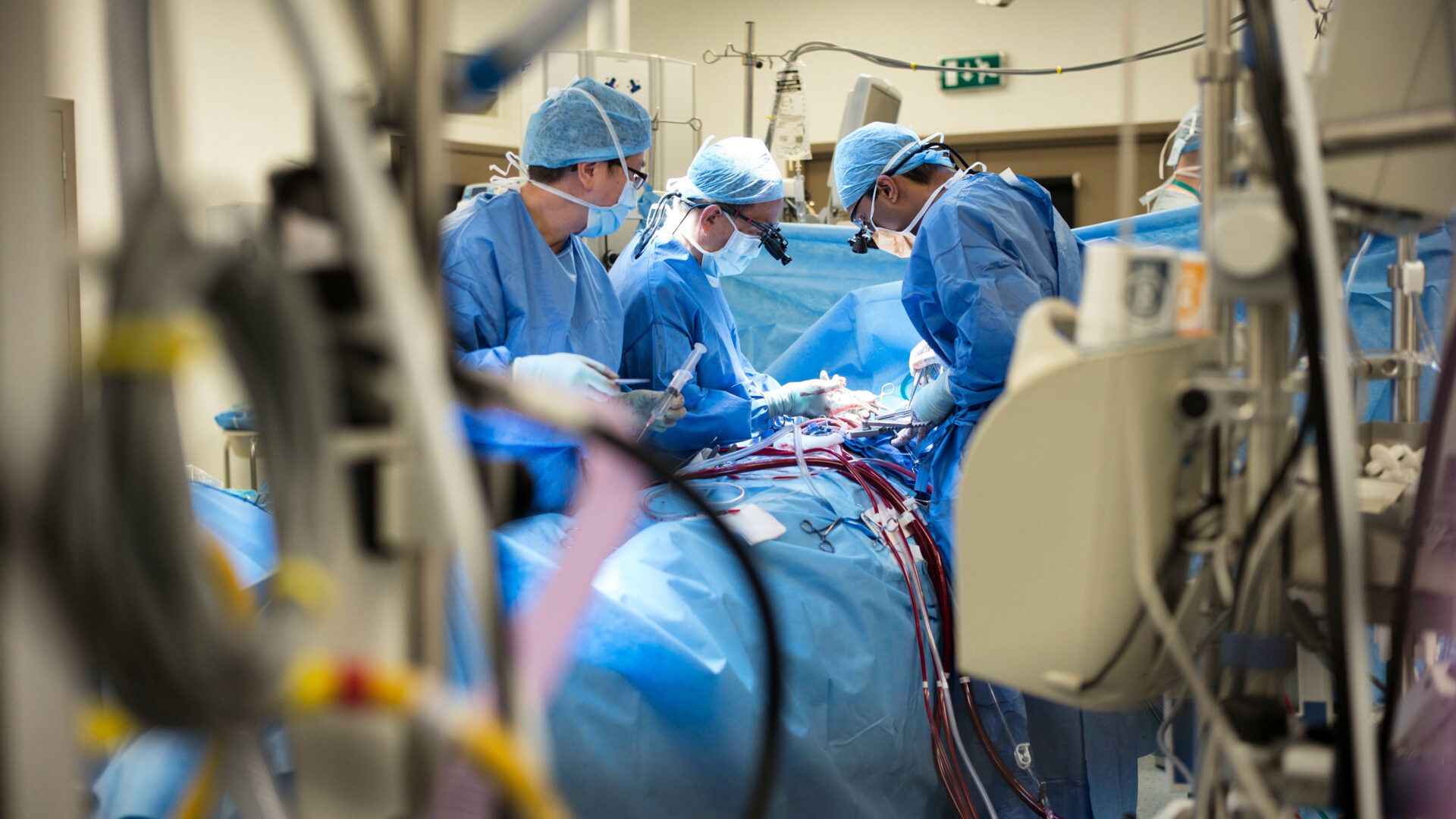
A brand-new Netflix documentary airing on Wednesday 23 July will showcase the heroic work of London’s four major trauma centres.
The London Major Trauma System treats over 12,000 people with serious injuries each year, according to NHS England. The busiest of those is at The Royal London Hospital – one of the five hospitals we support.
Over more than a decade, we have invested in several trauma projects because we want to help Barts Health NHS Trust staff to be able to save as many lives as possible.
Our investment in trauma
- We’ve invested over £8m in major trauma research and treatment since 2012. Our focus has been on increasing survival rates (particularly from those with severe bleeding), reducing disability rates after injury, and working to reduce violence. In 2012 we helped to establish the Centre for Trauma Sciences with £3.8m in funding. The Centre’s aim was to reduce death and disability from trauma by researching how the body responds to injury, and to study potential treatments.
- In 2021 we invested £3m in the Transform Trauma project. This aims to save lives for patients with severe bleeding by advancing treatment methods, testing out new treatments, and improving rapid intervention at The Royal London Hospital.
- We’ve invested £200,000 in violence reduction programmes.
Code Red
Critical bleeding was a major concern at the trauma ward. But now, more lives are being saved than ever before at The Royal London Hospital. In 2007, only 50% of patients survived severe bleeding. Now 80% survive. The ambition is to get to 90% by 2030.
One of the biggest achievements to come out of the Centre for Trauma Sciences is the introduction of the Major Haemorrhage Protocol (also known as Code Red). Code Red has completely revolutionised the way trauma patients are treated across the globe. It involves early activation of blood product transfusion, damage control surgery, and targeted resuscitation strategies.
Over 20,000 severely injured patients per year are admitted to trauma centres in the UK. And around 10% of these are treated using Code Red.
The introduction of Code Red has not only saved lives, but also saved the NHS huge amounts of money. It’s estimated to have saved at least £6.6m a year, although the true figure is likely much higher.
"We have reduced deaths by nearly a half, which is an incredible achievement... This is because we introduced the Code Red protocol, improved the type and timing of blood products given to patients, undertook earlier diagnostics and introduced damage control resuscitation surgery. All of these are the results of trauma research.”
Karim Brohi, Professor of Trauma Sciences at Queen Mary
Transform Trauma
Transform Trauma is a project we funded with £3m in 2021. It’s continuing to advance the way trauma patients with severe bleeding are treated. This includes:
- The installation of ECMO machines, which take over the role of the patient’s heart, and six diagnostic machines throughout a patient’s journey through trauma that help to check their clotting status.
- A new Satellite Transfusion Laboratory held at The Royal London Hospital’s Major Trauma Centre – which is closer to the patient, and will enable a faster delivery of blood with the right clotting agents.
- Reconfiguring the Major Trauma Centre to make it better equipped for rapid interventions to trauma patients who are severely bleeding.
Violence reduction
In London, incidences and deaths from knife crime continue to be very high. Since 2015 there have been, on average, over 100 deaths per year involving knives or sharp instruments. We wanted to find ways to reduce violence in the capital.
We have funded several projects that have supported the NHS London Violence Reduction Programme. This is an initiative that started at Barts Health in 2015 – and uses a public health approach to reduce violence in the capital. These projects include:
- Your Stance, an outreach programme that we supported to work with young people most at risk of violence. Volunteer health professionals visit prisons, young offender institutes and pupil referral units, explaining the risks of carrying a knife. They also teach lifesaving skills, such as first aid and haemorrhage control.
- An expansion of the Your Stance programme. This piloted a syllabus across four pupil referral units, which engaged 600 young people aged between 12 and 25. 80% of attendees said they felt better prepared to respond to emergencies after attending the session, and 85% felt their perception of NHS staff had improved after taking part.
- Funding the role of Violence Reduction Nurse at The Royal London Hospital. The postholder, Michael Carver, has developed a risk assessment tool to identify those at risk of violence within a hospital setting.
- The HEAL project. This is a team of trauma surgeons, violence reduction nurses, psychiatrists, public health experts and anthropologists, who are helping to build the picture of violent knife injury in East London to inform future intervention.
Our support for trauma is made possible thanks to our donors
This impact was made possible thanks to our incredible donors. Over the past few years six donors gave £652,000 towards trauma work taking place at The Royal London Hospital. We wanted to say a big thank you to:
- Bank of Montreal
- Charles S French Charitable Trust
- Garfield Weston Foundation
- Paul Rawlinson
- Richard Buxton
- Rosetrees Trust
Fiona Miller Smith, our Chief Executive, said: “The support of our donors has been instrumental in saving countless lives and advancing trauma research and treatment. And thanks to Critical, we’ll be able to see firsthand some of the inspiring and life-saving work which our donors have helped to fund.”