


High childhood obesity and tooth decay rates in East London
East London has some of the highest childhood obesity and tooth decay rates in the country. Sugary drinks are a major contributor to both unhealthy weight gain and tooth decay.
That’s why we funded this study – which aims to reduce sugary drink consumption in 12- to 13-year-olds, right at the age where habits become ingrained.
Co-designing an intervention with teachers and young people to reduce sugary drinks
The research project, led by Professor Huda Yusuf, ran a feasibility study, testing whether schools could help young people cut down on sugary drinks. They worked with two secondary schools in East London.
The intervention, which was delivered to 240 young people, aimed to reduce sugary drinks consumption and was co-designed with young people and teachers. It included:
- A mobile app (DISS DASH) for young people
- Resources to help parents support healthier choices at home
- Teacher training in Group Motivational Interviewing
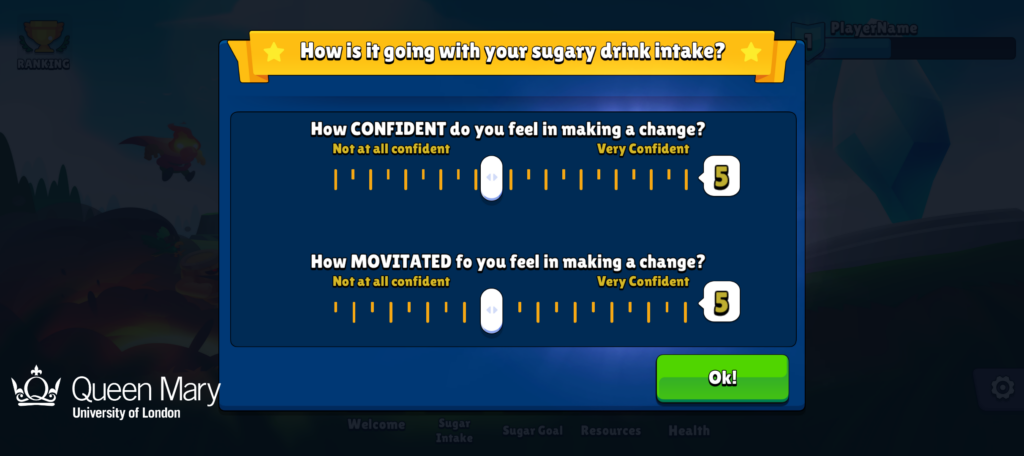
A screen shot of the DISS DASH app
About DISS DASH the app
DISS DASH is a platform game where players navigate different environments, aiming to beat their highest scores and compete with friends on the leaderboard. Along the way players can access educational content focused on healthy living and reducing sugary drink intake.
Findings from the study
Teachers and pupils who took part valued the intervention. Young people said that:
- They felt comfortable talking openly with teachers
- They liked being listened to
- The sessions were useful and collaborative
One student said: “I learnt from you in terms of having that healthy diet and regular physical activity.”
A teacher said: “I think it’s the right setting because… you’ve got a massive cohort of kids there that you can gain access to.”
Students felt that their health-related behaviors could be modified by highlighting risks and providing goals.
“Barts Charity has been instrumental in funding this local study to improve health outcomes for children and young people and the co-developed resources will be shared with schools and young people to enable healthy behaviours among our communities in East London.”Huda Yusuf, Professor of Dental Public Health at Queen Mary
Next steps
The findings suggest that the approach could be effective, although there were challenges in recruiting secondary schools. Professor Huda Yusuf and her team are now drafting publications, sharing resources with local authorities in North East London, and exploring future research avenues – including whether this would work better in primary schools.